12 Mistakes That Kill a Vertical Drama Before Development Starts
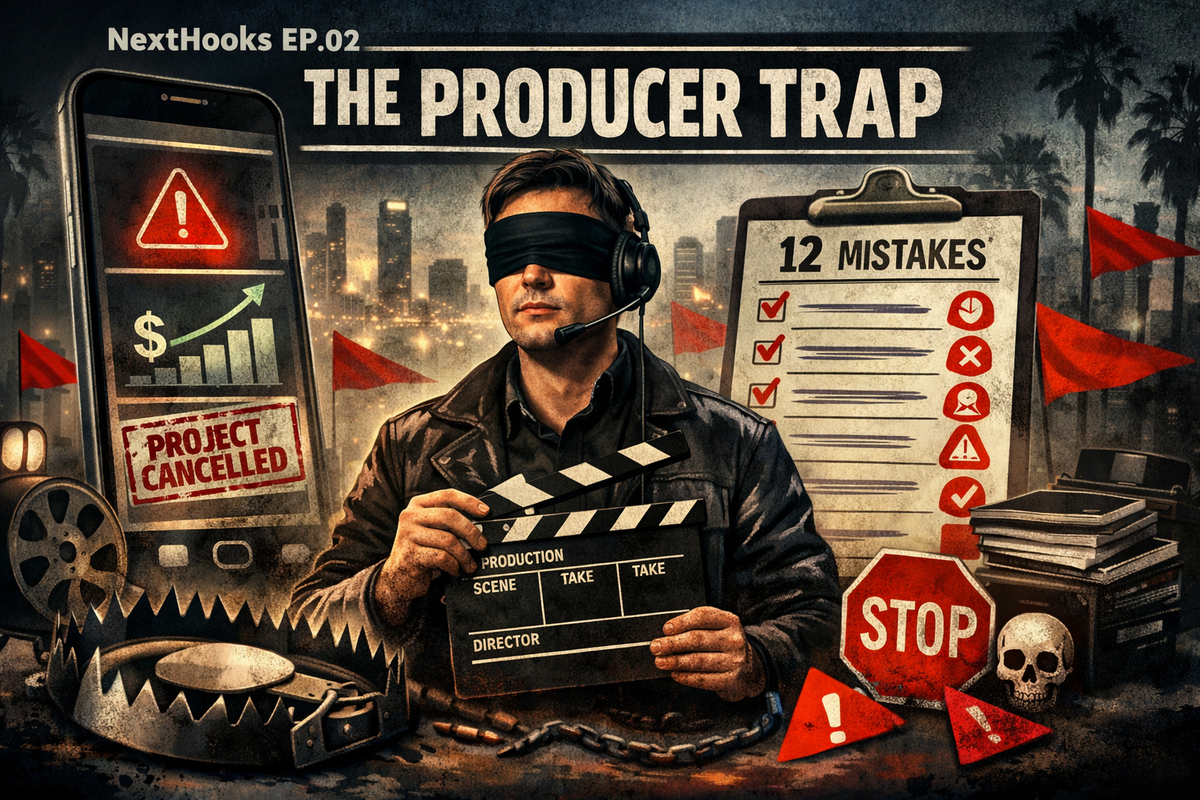
NextHooks EP.02: The Producer Trap|platforms do not pay for polish. Platforms pay for conversion.

Most experienced film and television professionals enter the vertical short drama market expecting a “downhill advantage.” Instead, they get hit hard. They do not lose in production. They lose before development even starts.
The reason is simple: they walk into a mobile-first, vertical product market with a traditional drama brain.
They build vertical short dramas with a TV development workflow.
They pitch with a film mindset, obsessed with “story completeness.”
They treat long-form development as the safest investment.
Then reality delivers a clean slap: platforms do not pay for polish.
Platforms pay for conversion.
In this market, the first mistake is both simple and fatal:
You are making a show.
But the platform is evaluating a fast-iterating product.
Based on my own projects and the hard lessons shared by producers who have shipped a lot of vertical content, I have distilled 12 common mistakes that can kill a project before the first day of shooting. A 3-minute self-check tool is in the next article.
M1. Treating “Development” as the Core Asset
In traditional drama, the script is the asset.
In vertical short drama, the asset is a hook system that can be validated through paid acquisition, plus a monetization rhythm.
The outcome is brutal: you create beautiful development documents, but nothing proves the project can actually sell.
M2. Fixating on Plot, Ignoring the First-Minute Payment Motive
You assume that if people keep watching, they will eventually pay.
Platforms care about something else: why users pay at Episode 6, Episode 10, Episode 15.
If you cannot explain the payment motive in one sentence, you are not speaking the platform language yet.