You are not pitching a story. You are pitching a buyable ROI asset
NextHooks EP.04: The Secret to a Short Drama Pitch| Platforms do not buy stories.They buy content built like fast-moving consumer goods: scalable, priceable, predictable, and easy to iterate.

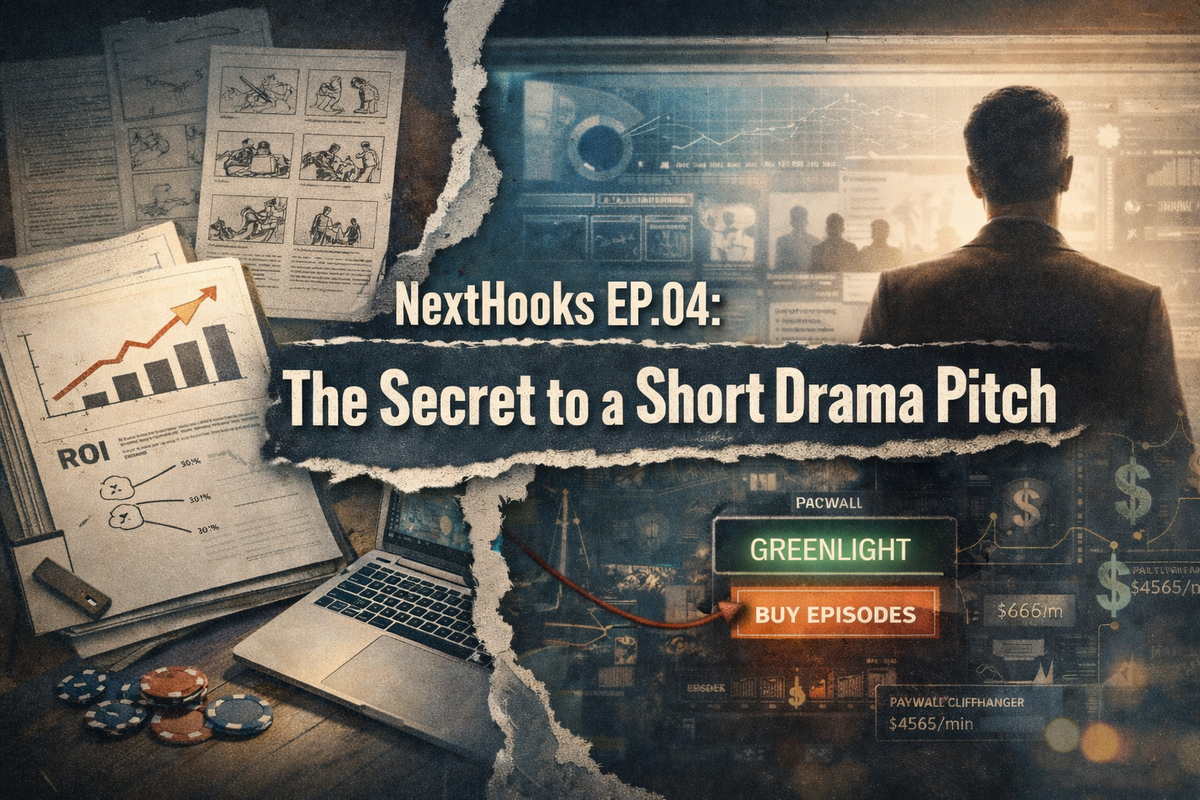
Platforms never lack stories. What they lack are projects they can greenlight fast.
That is why we are not delivering a traditional deck. We are delivering a tradable ROI.
What is a tradable ROI?
It is not just doing the math.
It is making one thing explicit in the short drama context: paid user behavior, click, stay, pay, pay again.
To put it bluntly: in the short drama market, platforms do not buy stories.
They buy content built like fast-moving consumer goods: scalable, priceable, predictable, and easy to iterate.
This piece focuses on one thing only.
When you submit a 35-page deck, with 34 pages on story, cast, and production plan, the platform still ends with one painful question:
In a market where stories converge and hooks look alike, why will viewers pay for this project, specifically?
So, the familiar parts of a traditional deck (story outline, character bios, cast plan, director’s statement) must be translated into the three questions platforms actually care about:
1. A one-line payment motive (why viewers must pay)
Here is a brutal reality: in short dramas assembled from highly standardized emotional modules, “content highlights” has, to some extent, become a false proposition.
Platforms are naturally immune to that phrase.
So do not write content highlights. Write the viewer’s psychological bill.