Global Short Drama Market Trends, March 2026 (Part I): Platforms, Product Shifts, and the New Production Power
Platforms are no longer treating short drama as a content leftover. They are turning it into a product entry point.

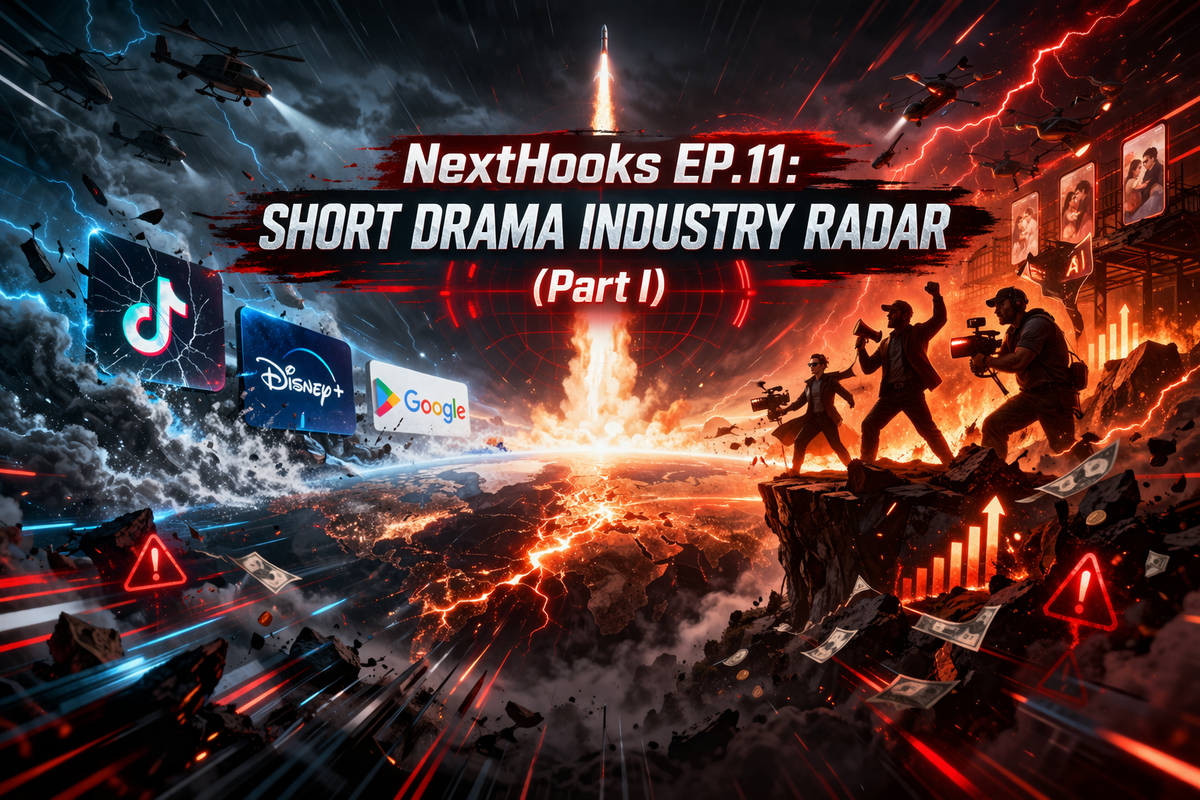
Over the past 30 days, a lot has changed in short drama.
Someone told the truth: short drama platforms spend 90% of their money on marketing.
Someone had a breakout hit: Master of Feng Shui pulled in 200 million views within 24 hours of launch.
One city council passed a unanimous vote to carve out a tax policy specifically for short drama.
One country put up $76 million, determined to turn itself into Southeast Asia’s short drama production hub.
What follows uses NextHooks’ original 5M model to track the global short drama market across five dimensions. Market covers platform entry points. Make looks at production power. Money tracks capital flows. Map reads industry ecosystems. Mandate covers policy and platform rules.
TikTok is already running three separate short drama products at the same time
- TikTok Minis (launched in late 2025)
An embedded short drama section inside the main app, featuring content from 20 third-party short drama suppliers. The first few episodes are free; the rest sit behind a paywall.
- PineDrama (launched January 16, 2026, in the U.S. and Brazil)
A standalone short drama app that is completely free and ad-free. Its interface closely mirrors TikTok’s. Three titles have already passed 100 million views.
- TikTok Short Drama feed (tested on March 21, 2026)
A dedicated short drama channel inside the main app, with categories such as Crime Lord, CEO, and Cute Kids. Everything is free. Some of the content is already AI-generated.
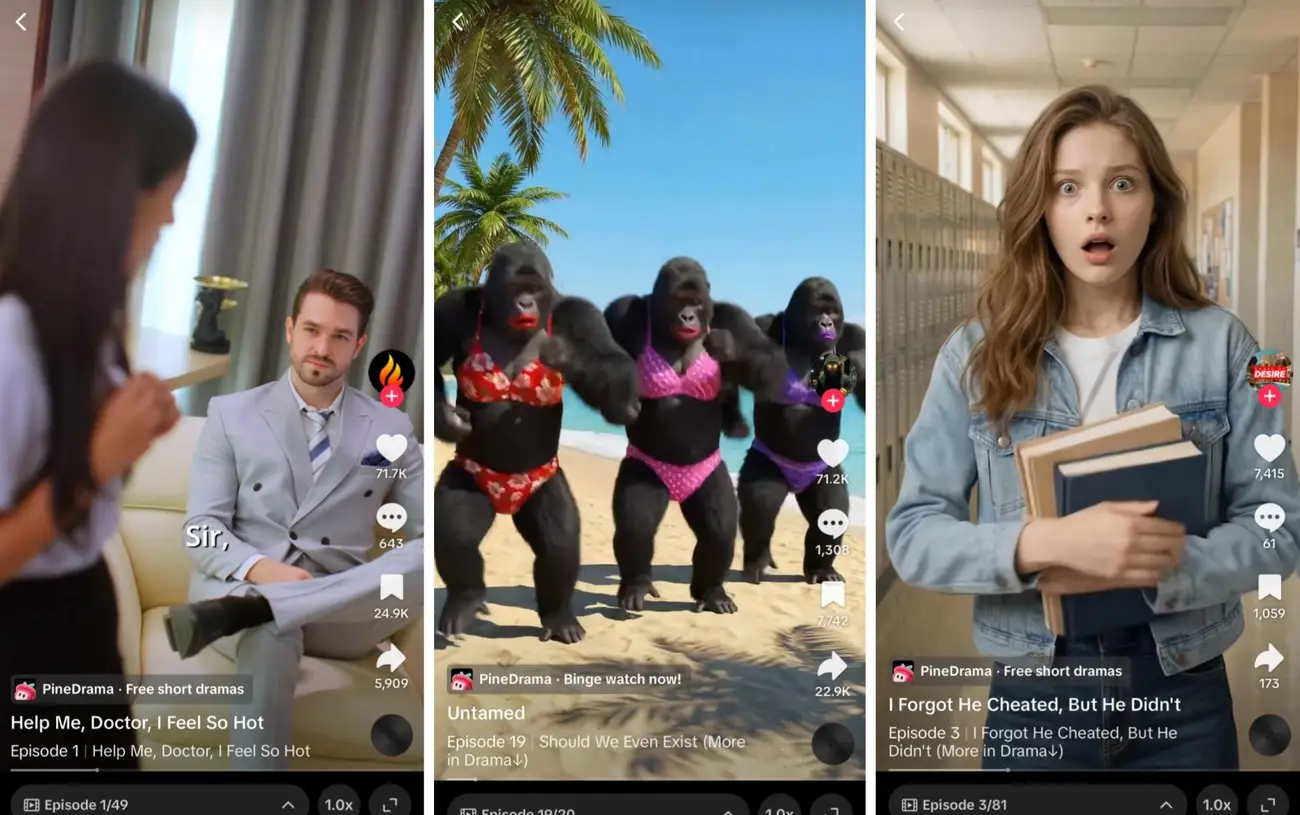
Three products map onto three different user behaviors: stumbling into a show while scrolling (Minis), opening an app specifically to watch (PineDrama), and following series inside the main app (Short Drama feed).
At the center of the strategy is one word: free. If ReelShort and DramaBox make money through paywalls, TikTok is using free content to lock in attention and leaving monetization for later. Hernan Lopez, founder of Owl & Co, believes PineDrama will eventually introduce a subscription model. But first comes habit.
Instagram is testing a Short Drama tab
On February 10, app researcher Alessandro Paluzzi posted screenshots on X showing that Instagram was internally testing a new feature called Short Drama: a separate tab built into creator profiles, sitting alongside Reels and Reposts, where users could follow updates for specific series.
The feature is still in early internal testing, and Instagram has made no public statement.
But there is one key difference from TikTok Minis. According to Paluzzi, Instagram’s Short Drama allows creators to lock episodes behind a subscription paywall. TikTok Minis is a discovery-and-retention product. If Instagram’s Short Drama rolls out, it would package discovery and monetization together. For creators, the logic is closer to a native paid serial system inside the platform than to a short drama aggregation feed.
Google moved into content development

On March 12, 100 Zeros, the Google-Range Media project, announced its move into microdrama.
The distribution path is clear: the first release window will land on the Google TV app on Android phones — where a dedicated vertical microdrama section has just gone live this year — before expanding across additional platforms.
What is interesting is that Google did not move to grab a standalone short drama app. Instead, it folded vertical content into the Google TV ecosystem it already had. This is a different kind of big-platform logic: do not build a new entry point. Let content do the work of keeping users inside the entry point you already own.