Global Short Drama Market Trends, March 2026 (Part II): Money, Market Expansion, and the Rules Taking Shape
In India, 89% of users discover micro dramas through social feeds, 65% entered the category within the past year, and the market is projected to reach $4.8 billion by 2026.

Part I is about who is moving into short drama. Part II is about who is putting real money behind it, which markets are scaling fastest, and where the rules are beginning to change.
What follows turns to the last three dimensions of the 5M model: Money, Map, and Mandate.
90% of short drama money is not being spent on content
In February, Omdia formally released data at MIP London showing that global short drama revenue reached $11 billion in 2025 and is expected to rise to $14 billion in 2026.
At the same event, Timothy Oh, General Manager of COL Group International, said out loud one of the industry’s least flattering truths: platforms are putting as much as 90% of their budgets into marketing, not production.

That result is not difficult to understand. As Maria Rua Aguete, Omdia’s head of media and entertainment, put it, “75% of video consumption takes place on a smartphone.” She also noted that even older audiences are increasingly watching video on mobile devices.
When the overwhelming majority of viewing behavior takes place on a phone, platforms will naturally put more of their budgets into audience reach and the fight for attention rather than into content itself — and that is precisely the part most worth being alert to in the future.
$76 million: the goal is to become Southeast Asia’s short drama production hub
During FilMart in Hong Kong this March, Malaysia’s National Film Development Corporation, FINAS, announced an updated production rebate program totaling $76 million, explicitly extending eligibility to micro-dramas. The goal was stated plainly: position Malaysia as Southeast Asia’s short drama production hub.
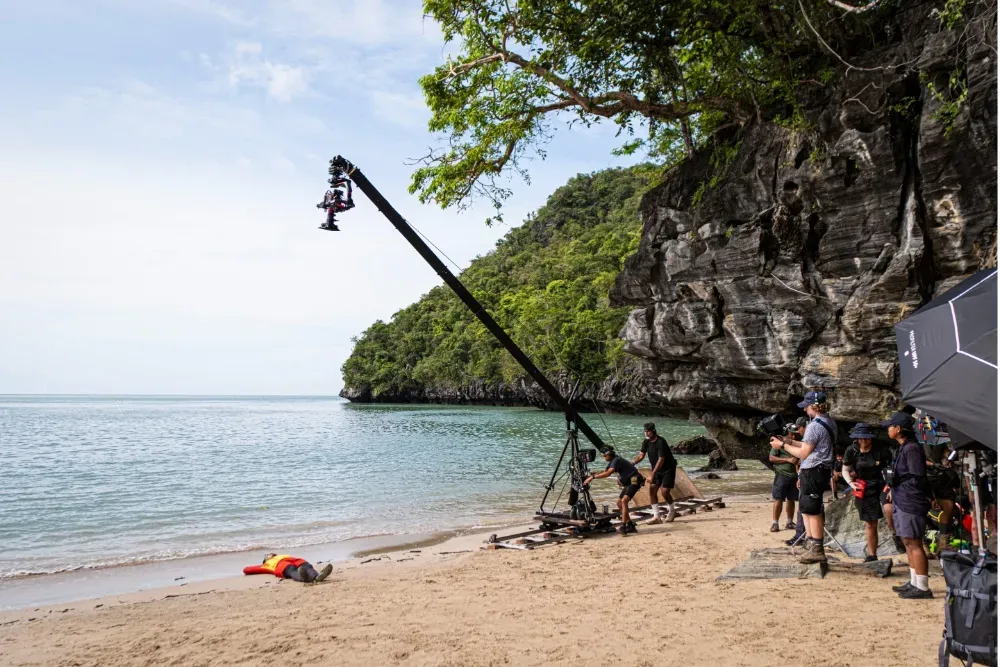
A funding signal at the government level means only one thing: short drama has entered the policy agenda of national cultural industry strategy. It is no longer just a game for platforms and startups.