2026 Q1 AI Short Drama Chart Insights: AI Short Drama Is Diverging from Live-Action
AI short drama isn't live-action's budget understudy. It's evolving into something closer to a gamified emotional product — a different species entirely.

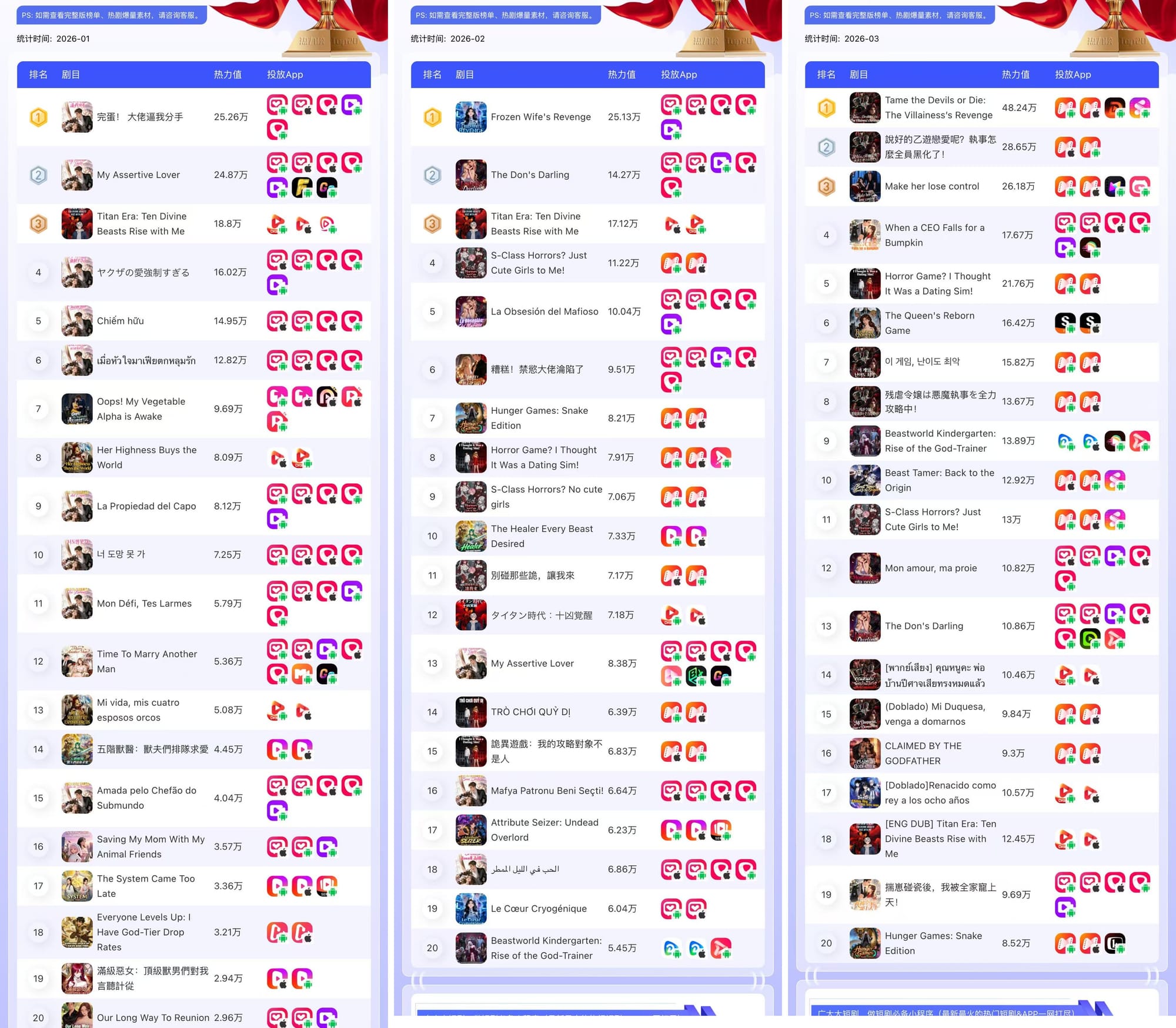
If you only skim the surface, the monthly AI drama Top 20 charts for Q1 2026 look like a stew with too many ingredients.
Mafia bosses. Billionaire CEOs. Otome game mechanics. Beastworld fantasy. Horror games. Snake evolution arcs...
But stack January, February, and March side by side and look for the underlying logic — and what you find isn't chaos. It's convergence.
This format hasn't sprawled into a catch-all container for whatever someone felt like making. The opposite is happening : AI short drama is rapidly consolidating around a handful of emotional templates — sharply defined, highly industrialized, and almost perfectly suited to AI production.
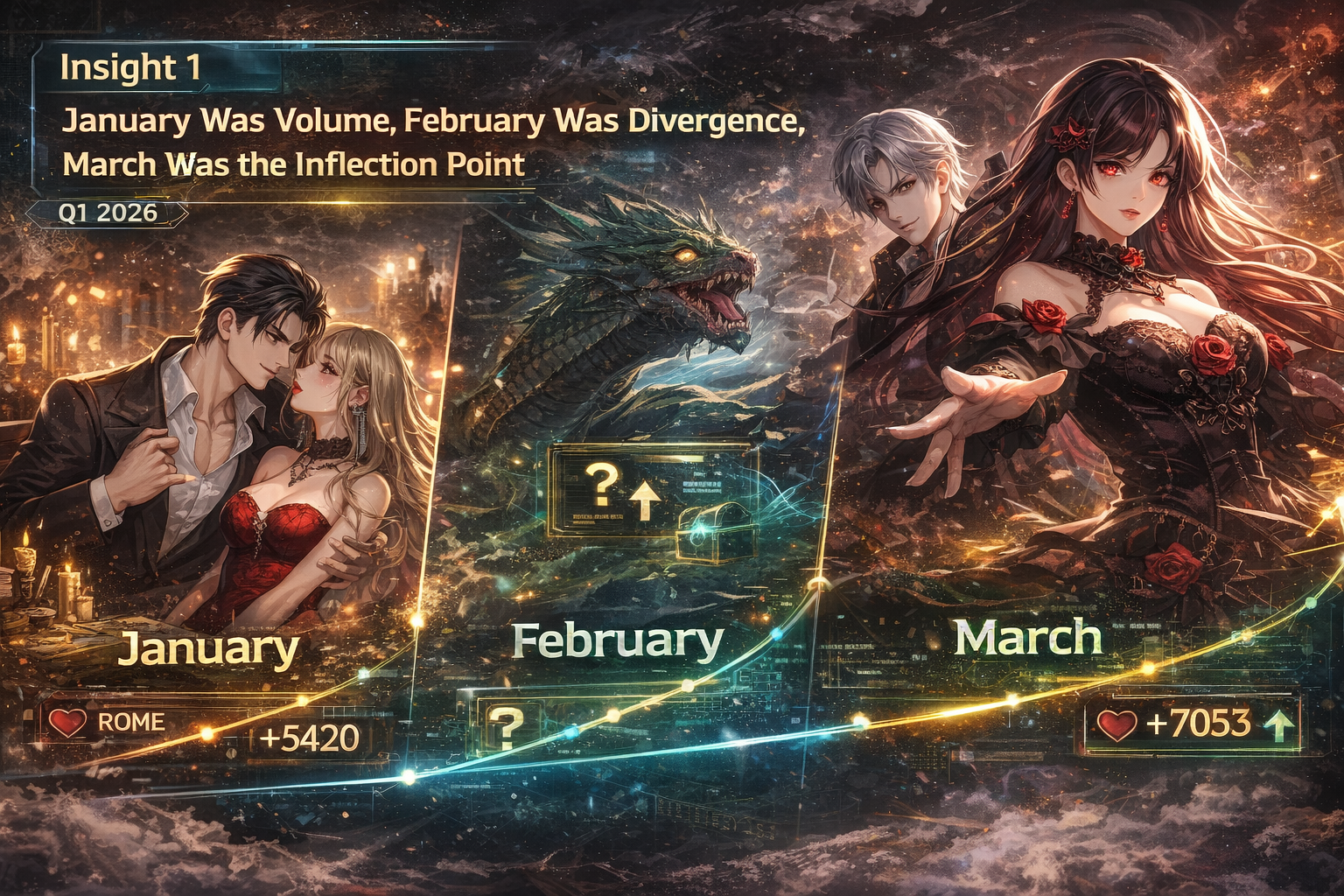
Insight 1: January Was Volume, February Was Divergence, March Was the Inflection Point
If you treat Q1 2026 as a short time-lapse, the trajectory is clear.
January: High-volume distribution of proven archetypes
Mafia romance in multiple languages. The same premise recycled across language variants. Projects distributed across 4–7 platforms at once.
The most striking thing about the January chart wasn't any single title — it was the emotional architecture underneath all of them: mafia love, possessiveness, forced romance, dangerous devotion, the same relationship dynamic dubbed into a new tongue.
January reads less like a creative moment and more like a logistics operation. Platforms were running high-density rollouts of already-validated relationship archetypes, stress-testing distribution across languages. Less artistic direction, more: let's see what sticks where.
February: Two tracks take shape
Dangerous romance stayed strong. But a second lane had clearly emerged.
Titan Era. S-Class Horrors? Horror Game? Hunger Games: Snake Edition. The Healer Every Beast Desired.
The market was no longer just "dangerous man falls for me." Two distinct tracks were now competing for the same audience:
One kept feeding on relationship dopamine.
The other started feeding on something different — system mechanics, isekai settings, world-building as the hook.
March: Feminine Fantasy Systems Rise
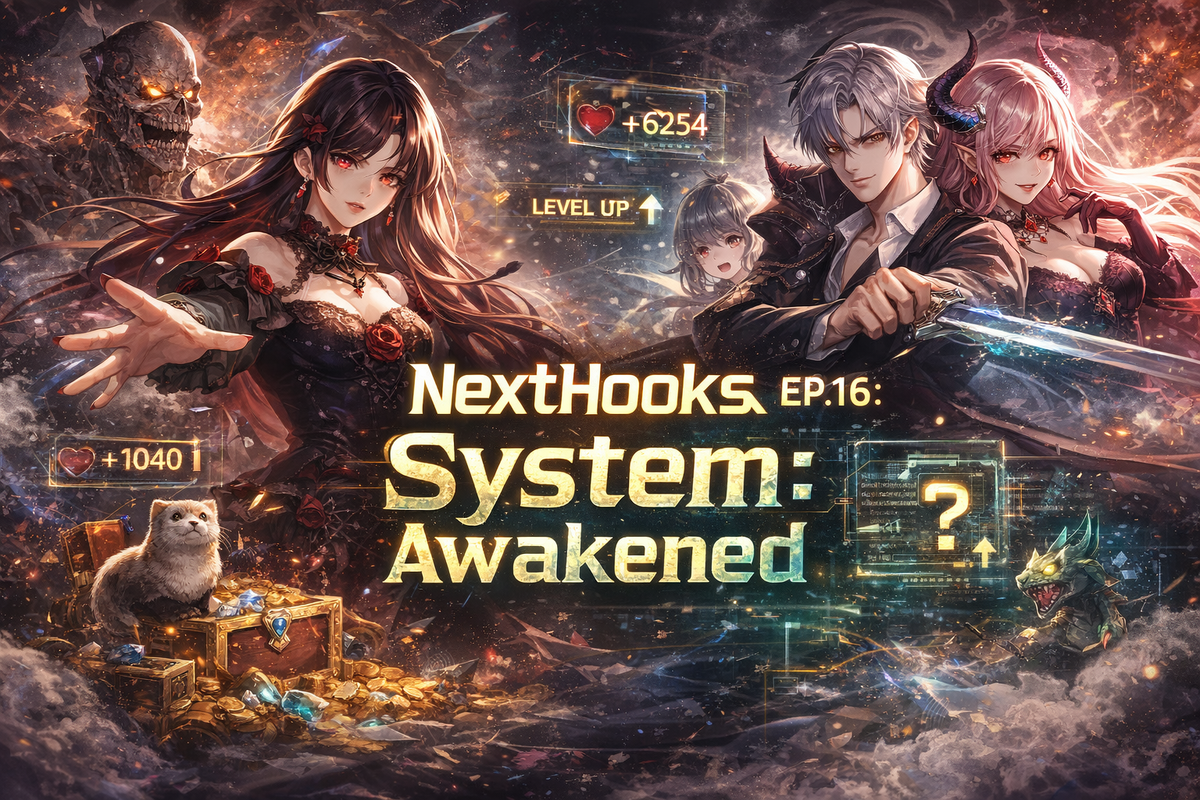
By March, the chart-topper wasn't a mafia boss or a billionaire CEO. It was Tame the Devils or Die: The Villainess's Revenge — not a traditional mafia romance, but an otome-isekai system with a villainess protagonist and a corrupted butler.
Female-oriented content had clearly outgrown the conventional billionaire fantasy. It was moving into territory that suits AI far better: otome transmigration, villainess reincarnation, yandere love interests, multiple male leads, survival-by-seduction, fantasy rule systems.
Romance was no longer just carried by the dangerous alpha. It was evolving into something structurally richer: female fantasy worldbuilding + game mechanics + multiple male leads + corruption arcs.
AI short drama has fast-tracked feminine content to its next stage. The premise has upgraded from "he's powerful and he loves me" to: "I've been dropped into a high-stakes rule system. Multiple dangerous, powerful men are losing control because of me. I have to survive this world — and outmaneuver all of them."
That setup is better suited to AI than the classic billionaire formula. Not just because the relationship tension is higher — but because the pleasure doesn't come from the relationship alone. It comes from the mechanics.
And mechanics, it turns out, are exactly what AI is built to produce at scale.